How Modern Trucks Are Increasing Both Efficiency and Repair Costs?

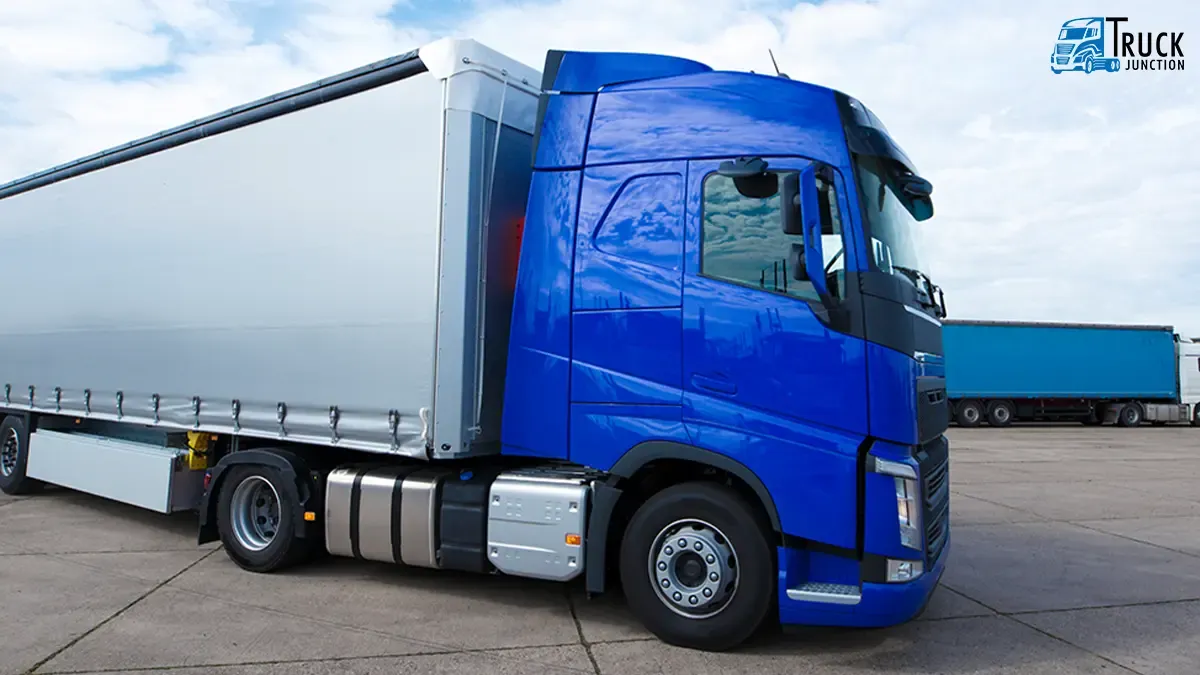


A truck bought today does a lot more than one would have bought 15 years ago. Ask any truck owner in Namakkal, Indore or Transport Nagar about today’s trucks, and you'll hear two things. The new BS-VI trucks pull much better, consume much less diesel, and are much more comfortable for the driver. The downside is that when something goes wrong, the bill is a hell of a lot more than it used to be.
Check Your Commercial Vehicle History
Check Now
Both are true. The cleaner emission norms, the safety standards and the digital tools have all had a massive impact on Indian trucks, with real benefits and real costs. This is important because India runs on trucks. As per NITI Aayog’s 2021 report, Fast Tracking Freight in India, roads carried 71% of India's freight in 2020 and rail only 18%.
What Makes Modern Trucks More Efficient Than The Earlier Generations?
Modern trucks are more efficient than their predecessors because they have cleaner engines, computer-controlled fuel systems and better designs that waste less diesel. Older trucks were reliant on mechanical pumps and the driver’s feel. The BS-VI trucks use electronic fuel injection, which sprays the exact amount of diesel at the exact moment.
Rules have been driving the industry in this direction. The BEE (Bureau of Energy Efficiency) finalised fuel-efficiency norms for commercial vehicles of 12 tonnes and above in August 2017. With radial tyres, better cabin shapes and higher payloads, a modern truck will move more goods per litre. That's a saving. In a June 2026 WRI India discussion, the All India Transporters Welfare Association said diesel accounts for around 50% of the operating cost of a truck.
Which Technologies Are Driving Productivity Gains in Modern Commercial Vehicles?
The technologies driving productivity gains in modern commercial vehicles are the ones that keep trucks moving longer and stopping less:
- GPS and telematics: Owners track location, speed and fuel use from a phone.
- Electronic engine controls: The engine adjusts power and fuel to the load and the road.
- AC cabins: A MoRTH notification, dated 8 December 2023, requires all N2 and N3 trucks (goods vehicles above 3.5 tonnes) made on or after 1 October 2025 to have air-conditioned cabins. A more comfortable driver can stay productive for longer hours and experience lower fatigue on long-distance routes.
- FASTag: Minister Nitin Gadkari told the Lok Sabha in August 2023 that average waiting time at toll plazas fell from 734 seconds to 47 seconds, as reported by All India Radio News.
Why are repair costs going up as trucks become more Advanced?
Repair costs are going up as the trucks become more advanced as every new feature adds more parts that are expensive, more delicate and more difficult to repair. If one sensor fails, the engine will cut power to itself until the fault is cleared.
You need a diagnostic scanner and a properly trained mechanic to find that fault. A lot of roadside garages on the national highways won't have either so the owner is forced to go to an authorised service centre where the labour rates are higher. The parts are more expensive too as they are built to a much tighter specification and are often only available through the company's own network. Maintenance and AdBlue costs for BS-VI trucks have both gone up significantly according to WRI India.
More tech is on the way actually (MoRTH draft notification 2025 proposed emergency braking and driver drowsiness warning for new trucks and buses). That's life saving, just the cameras and radar on those units are very expensive to repair.
How is Technology Changing the Total Cost of Truck Ownership?
Technology is changing the total cost of truck ownership by lowering daily running costs while raising the buying price, the EMI and the cost of big repairs. Total cost of ownership means everything a truck costs over its working life, not just the showroom price.
|
Cost area |
Older BS-III/BS-IV trucks |
Modern BS-VI trucks |
|
Buying price and EMI |
Lower |
Higher |
|
Diesel per trip |
Higher |
Lower |
|
Routine servicing |
Simple, any local mechanic |
Needs trained staff and AdBlue (a liquid that cleans exhaust) |
|
Major repairs |
Cheap, easily available parts |
Costly electronics, mostly authorised workshops |
|
Days off the road |
Fewer |
Can increase if specialised electronic or emission-control parts are not immediately available |
The EMI jump is real: Business Standard reported in May 2025 that the shift from BS-IV to BS-VI raised truck EMIs by about 50%. Truck makers estimated the AC cabin rule would add ₹30,000 to ₹50,000 per truck, as Autocar Professional reported. However, this is an industry estimate, not an official figure.
Which Truck Components Have Become More Expensive to Repair or Replace?
The truck components that have become more expensive to repair or replace are mostly the electronic and pollution-control parts that older Indian trucks never had.
|
Component |
What it does |
Why repairs cost more |
|
Fuel injectors |
Spray diesel at very high pressure |
Built to fine tolerances; adulterated diesel damages them |
|
Turbocharger |
Pushes extra air into the engine |
Precise parts spinning at high speed |
|
SCR and AdBlue pump |
Cleans harmful exhaust gases |
Sensors fail; fake AdBlue causes faults |
|
Diesel particulate filter (DPF) |
Traps soot |
Can block; cleaning or replacing is costly |
|
ECU and sensors |
Control engine, brakes and gearbox |
Need special scanners and coding |
|
Safety cameras and radar |
Warn the driver or brake automatically |
Need setting up again after damage |
What Happens When a Modern Truck Breaks Down on the Road?
When a modern truck breaks down on the road, the owner faces three costs at once:
- moving the truck
- fixing it
- and losing income while it stands.
The driver should first pull to the left, switch on hazard lights, place a warning triangle behind the truck and call for help. While local roadside mechanics can handle some basic issues, many BS-VI engine and emission-system faults require specialised diagnostic equipment available at authorised workshops. As a result, owners may incur towing charges, driver allowances, load-transfer expenses and delays in delivery schedules. If the goods are perishable, the customer may cut payment too.
How Can Fleet Owners Reduce the Financial Impact of Rising Repair Bills?
Fleet owners can reduce the financial impact of rising repair bills by catching problems early, using the right fluids, training drivers and keeping suitable insurance.
- Follow the service schedule: Skipping a service often leads to a bigger bill later.
- Use clean diesel and genuine AdBlue: Poor fuels are a common cause of injector and exhaust faults.
- Act on warning lights: Check any alerts or warning lights the same day, not after the trip.
- Train drivers: Smooth driving and no overloading reduce wear on the clutch, brakes and tyres.
- Monitor telematics data: Tracking fuel consumption, fault alerts and engine performance helps identify issues before they become expensive repairs.
- Review insurance cover: A comprehensive commercial vehicle insurance policy can help cover damage from accidents, fire, theft, or floods, subject to the policy’s coverage, limits, and terms. Add-ons such as engine protection or consumables cover, where offered, can help with costs a basic policy leaves out.
Why Unexpected Repair Costs Can Affect Fleet Profitability?
Unexpected repair costs can affect fleet profitability because the owner pays twice: once for the repair and again in lost income while the truck stands idle. Meanwhile, EMIs, driver salaries, permits and road tax still fall due every month. Small fleet operators feel this impact the most because every truck plays a critical role in generating daily revenue.
This is why many fleet operators consider truck insurance an important risk-management tool. Besides helping cover accident-related repair costs under the policy terms, suitable coverage can reduce the financial impact of major incidents that might otherwise strain cash flow and disrupt business operations.
Do the Efficiency Benefits of Modern Trucks Outweigh the Higher Repair Costs?
For the majority of owners, the efficiency gains of a modern truck do more than make up for the higher repair costs, provided the truck is well maintained and kept well utilised. With diesel accounting for around half of the running costs, the small savings per trip add up over time.
Old trucks aren't cheap either. ICRA estimated that as at 31st March 2024 there were around 1.1 million medium and heavy commercial vehicles in India which were over 15 years old. Older trucks also tend to require more repairs. The sensible thing to do is look at a truck's total lifetime cost rather than just the purchase price.
Conclusion
BS-VI trucks are cleaner, smarter, and cheaper to run per trip, but they require more care and cost more to fix. The key to keeping them on the road and earning is a combination of regular servicing, trained drivers, acting quickly on any warning signs and having the right insurance in place.
FAQs
- Why are BS-VI trucks more expensive to repair?
BS VI trucks use EFI (electronic fuel injection), many sensors and various exhaust-cleaning components such as the SCR system and the DPF. All of those bits are more expensive, require diagnostic scanners, and need a properly trained mechanic to work on them. They're almost exclusively serviced at the authorised workshops.
- What is the most expensive thing to fix on a modern truck?
The engine and its fuel system are generally the most expensive. The injectors, turbo, and exhaust bits (DPF, etc.) are all fairly costly.
- What should a driver do if a truck breaks down on the highway?
Pull left, switch on the hazard lights and put a warning triangle behind the truck. Then, call the owner or roadside assistance and don't keep restarting the engine while the warning light is on.
- How can truck owners reduce their repair and maintenance costs?
Stick to the service schedule, use clean diesel and genuine AdBlue, immediately address any warning lights as soon as possible and train drivers to avoid overloading and aggressive braking.
- Does commercial vehicle insurance cover the cost of truck repairs?
A comprehensive policy can help cover the cost of repairs following an accident, fire, theft, or natural disaster (subject to the terms of the policy, of course). It won't cover normal wear and tear or routine servicing, so regular maintenance is much needed.



Popular Brands


Similar News
 Auto
Force Motors to Launch Electric Traveller Vans in January–March 2027
By Syed Usman Hasan
Continue Reading
 Auto
Tata Azura 812 Truck Review: Mileage, Payload Capacity & Specifications
By Syed Usman Hasan
Continue Reading
 Auto
FADA Electric 3W Retail Sales October 2026: Sales Rise 24.76% YoY to 88,570 Units
By Syed Usman Hasan
Continue Reading